.webp) gametoptop.com
gametoptop.comTeam Fortress 2 – A Complete Guide to Classes, Gameplay, Strategy, and Replay Value
Introduction
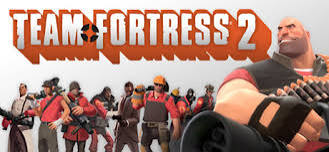
Team Fortress 2, commonly known as TF2, is one of the most influential team-based multiplayer shooters ever created. Developed by Valve, the game combines fast-paced combat, distinctive character design, objective-based gameplay, and an unmistakable sense of humor. Rather than attempting to create a realistic military simulation, Team Fortress 2 embraces exaggerated weapons, colorful environments, memorable personalities, and highly specialized character classes.
The central idea behind TF2 is simple: two teams compete to complete objectives while nine different classes provide completely different abilities and responsibilities. A successful team is rarely built around individual aim alone. Players must understand their role, communicate with teammates, control important areas of the map, and adapt their strategy as the match develops.
One reason Team Fortress 2 has remained relevant for so many years is its extraordinary gameplay variety. A player can spend one match defending an objective as an Engineer, then switch to Scout for fast attacks or Medic for team support. Every class changes the way the game feels, and learning how these roles interact creates considerable strategic depth.
This guide examines Team Fortress 2 from the basics through advanced gameplay, including its classes, game modes, maps, teamwork, progression, strengths, weaknesses, and overall rating.
1. Getting Started With Team Fortress 2
The first experience with Team Fortress 2 can be slightly overwhelming because the game offers nine classes with very different responsibilities. New players may initially focus only on eliminating opponents, but TF2 is fundamentally an objective-based team shooter.
Winning often depends on capturing control points, pushing payloads, defending strategic locations, collecting intelligence, or completing another map-specific objective. Eliminations are useful because they create opportunities, but they are usually a means to an objective rather than the objective itself.
Understanding the Nine Classes
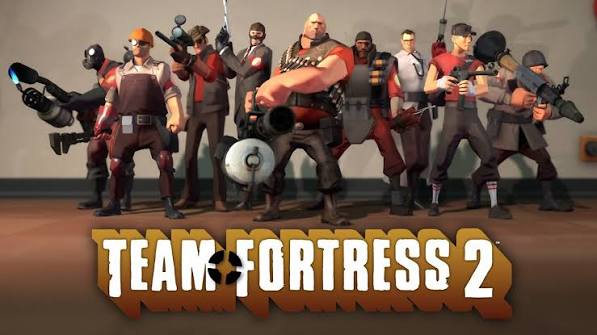
The nine classes are divided into different general roles:
- Scout – fast offensive specialist
- Soldier – versatile combat class
- Pyro – close-range fighter and area defender
- Demoman – explosive weapons and area control
- Heavy – powerful sustained fire
- Engineer – defensive construction specialist
- Medic – healing and team support
- Sniper – long-range precision
- Spy – stealth and infiltration
Each class has clear strengths and weaknesses. Learning what your chosen class is supposed to accomplish is more important than simply learning its weapons.
Choosing a Beginner-Friendly Class
New players often benefit from experimenting with several classes instead of committing immediately to one. Soldier provides a relatively straightforward introduction to combat, while Heavy offers strong firepower and durability. Medic teaches positioning and teamwork, although supporting teammates effectively requires awareness.
The important thing is to understand that there is no universally strongest class. TF2 is built around interaction between roles, meaning the effectiveness of one class often depends on what the rest of the team is doing.
2. Understanding the Core Gameplay
Team Fortress 2 uses fast movement, distinctive weapon mechanics, and objective-focused maps to create matches that can change dramatically within minutes. Players must constantly evaluate the battlefield and decide whether to attack, defend, reposition, or support their teammates.
Movement is especially important. Each class has a different speed, health level, weapon selection, and mobility profile. Scout can rapidly travel across the map, while Heavy moves much more slowly but possesses tremendous firepower.
Objectives Come First
Different game modes introduce different goals. Depending on the map, players may need to:
- Capture control points
- Push a payload
- Defend or attack objectives
- Capture enemy intelligence
- Control territorial areas
- Complete specialized map objectives
A common beginner mistake is chasing opponents far away from the objective. This can leave important areas undefended or allow the enemy team to advance.
Learning Map Awareness
Strong TF2 players constantly pay attention to:
- Teammate positions
- Enemy locations
- Health and ammunition resources
- Objective status
- Available escape routes
- Important choke points
Good awareness allows players to make better decisions before combat even begins.
3. Mastering the Nine Classes
The class system is arguably Team Fortress 2's defining feature. Each class provides a different tactical tool, and understanding their interactions is essential for improving.
Scout
Scout is the game's speed specialist. His mobility allows him to reach objectives quickly, flank opponents, and retreat before slower enemies can respond.
His strengths include:
- Exceptional movement speed
- Double jumping
- Strong close-range damage
- Excellent objective mobility
However, Scout has relatively low health and can be punished heavily when caught in open areas.
Soldier
Soldier is one of the most versatile classes. His rocket launcher provides reliable damage while rocket jumping gives him unusual mobility.
He can:
- Attack groups of enemies
- Hold defensive positions
- Rocket jump across the map
- Pressure enemy defenses
- Fight at multiple ranges
Soldier is an excellent class for players who want a balance between offense, defense, mobility, and firepower.
Pyro
Pyro specializes in close-range combat and area denial. His flamethrower is particularly effective in confined spaces.
Pyro can also help defend teammates from certain threats and disrupt enemy attacks. Learning when to engage and when to retreat is important because close-range combat can expose Pyro to significant danger.
Demoman
Demoman is an explosive specialist capable of controlling areas with grenades and sticky bombs. His weapons are particularly effective around doorways, corridors, and objectives.
A skilled Demoman can make important areas extremely difficult for enemies to approach.
Heavy
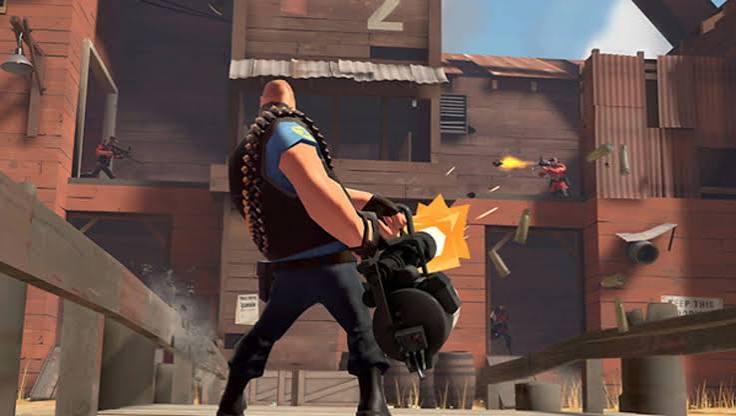
Heavy is the team's primary sustained-fire specialist. His minigun delivers enormous damage at close and medium range, while his large health pool allows him to survive situations that would eliminate lighter classes.
His main weakness is mobility. Heavy can become vulnerable when isolated or attacked from multiple directions.
Engineer
Engineer builds defensive structures, including sentry guns, dispensers, and teleporters. These buildings can dramatically strengthen a team's defensive position.
A good Engineer thinks beyond simply placing a sentry. Building placement, team positioning, and adapting to enemy attacks are essential.
Medic
Medic is arguably one of the most important support classes. His healing keeps teammates alive and his ÜberCharge can create opportunities for coordinated attacks.
A strong Medic must constantly balance several priorities:
- Stay alive
- Heal the correct teammates
- Maintain awareness
- Avoid unnecessary exposure
- Coordinate powerful pushes
Because Medic has such a significant impact on team survival, experienced opponents often prioritize disrupting enemy Medics.
Sniper
Sniper specializes in long-range precision. He can eliminate key targets before they become major threats, but his effectiveness depends heavily on positioning and accuracy.
Sniper players must also remain aware of enemy flankers, especially Spies and mobile Scouts.
Spy
Spy is the game's deception specialist. He can disguise himself, become temporarily invisible, and attack vulnerable targets from unexpected positions.
Spy is particularly effective against high-value targets such as Engineers, Medics, and Snipers. However, Spy requires patience and excellent awareness because careless movement can reveal his presence.
4. Game Modes and Map Design
Team Fortress 2 offers a broad selection of objective-based game modes. Each mode encourages different strategies and class combinations.
Payload
One team pushes a cart through a series of checkpoints while the opposing team attempts to stop it. Payload creates dynamic front lines because the battlefield changes as the cart advances.
Capture the Flag
Teams attempt to steal enemy intelligence while defending their own. This mode emphasizes mobility, defense, and coordinated attacks.
Control Points
Teams fight to capture and maintain important areas of the map. Control Point matches can change quickly when one team loses control of a critical location.
King of the Hill
Both teams fight over a single central objective. Once a team captures it, they must defend it until the timer reaches zero.
Map Knowledge
Every mode rewards players who understand the map. Knowing alternate routes, health-pack locations, choke points, and defensive positions can provide a major advantage.
Experienced players often spend as much time studying map structure as practicing aim.
5. Teamwork, Communication, and Strategy
Although individual mechanical skill matters, Team Fortress 2 is ultimately a team game. A player with excellent aim can still lose if the team fails to coordinate around objectives.
Team composition matters because different classes solve different problems. If the enemy has a powerful Engineer defense, a team may need Demoman pressure or coordinated attacks. If the enemy has dangerous Snipers, players may need alternative routes or Spy pressure.
Effective Team Habits
- Protect your Medic
- Attack together
- Defend objectives
- Communicate important enemy positions
- Avoid unnecessary solo pushes
- Adapt class selection to the battlefield
- Take advantage of enemy weaknesses
The Importance of Adaptation
A strong player does not stubbornly use one class regardless of circumstances. If the current strategy is failing, changing class can solve the problem.
For example, repeatedly attacking the same defensive position with identical tactics is rarely productive. Switching roles or coordinating a different attack route can create an opening.
6. Weapons, Loadouts, and Customization
Team Fortress 2 offers a large collection of weapons and cosmetic items. Alternative weapons can change how a class performs and encourage players to experiment with different playstyles.
Loadout customization is particularly interesting because it can alter the tactical role of a class without completely removing its identity.
Examples of Loadout Choices
Players may prioritize:
- Higher mobility
- Defensive utility
- Increased damage
- Support capabilities
- Different movement options
- Alternative tactical abilities
Cosmetic items provide another layer of personalization. Hats, unusual effects, weapon appearances, and other cosmetic options have become an important part of the game's culture.
However, players should remember that cosmetics do not automatically make someone a better player. Mechanical skill, positioning, and teamwork remain much more important.
7. Improving Your Skills
Improving at Team Fortress 2 takes practice, but players can accelerate the learning process by focusing on specific fundamentals rather than attempting to master everything simultaneously.
Aim and Movement
Different classes require different forms of mechanical skill. Scout emphasizes tracking and movement, Soldier involves projectile prediction and rocket jumping, while Sniper requires precision and target selection.
Positioning
Good positioning allows players to deal damage while minimizing their own exposure. Avoid standing in predictable locations, especially when the opposing team has Snipers or explosive specialists.
Timing
Attacking at the right moment can be more valuable than attacking immediately. Waiting for teammates to regroup, coordinating an ÜberCharge, or striking after an enemy defensive structure is weakened can turn a difficult situation into an easy victory.
Learn From Mistakes
After losing an encounter, ask:
- Why did I die?
- Was I isolated?
- Did I enter the fight too early?
- Did I ignore the objective?
- Was another class better suited to the situation?
This approach turns mistakes into useful information.
8. Community, Longevity, and Replay Value
One of Team Fortress 2's greatest achievements is its longevity. The game has remained recognizable and culturally relevant long after its original release.
Its distinctive characters, memorable voice lines, maps, weapons, community servers, and player-created content have helped establish a passionate community.
Why TF2 Remains Replayable
- Nine distinct classes
- Numerous maps
- Multiple game modes
- Different team compositions
- Large weapon selection
- Community-created content
- Competitive learning curve
- Cosmetic collecting
Every class offers a different experience, meaning learning one role does not mean you have mastered the entire game.
The community aspect also contributes significantly to longevity. Players can approach the game casually, competitively, socially, or as a long-term collection hobby.
9. Rating and Final Verdict
Team Fortress 2 remains an exceptional example of how strong gameplay fundamentals can create long-term appeal. Its nine classes are remarkably well differentiated, and the interaction between them produces situations that are difficult to reproduce in other shooters.
The game also succeeds because it does not take itself too seriously. Its humor, exaggerated characters, unusual weapons, and colorful art style give it a personality that separates it from realistic military shooters.
Detailed Rating
CategoryRatingGameplay9.7/10Class Design9.9/10Map Design9.3/10Teamwork9.8/10Variety9.7/10Customization9.4/10Accessibility8.0/10Replay Value9.8/10Overall Experience9.5/10
Final Rating: 9.5/10
Team Fortress 2 remains a highly enjoyable multiplayer shooter for players who appreciate distinctive classes, objective-based competition, teamwork, and humorous presentation.
Conclusion
Team Fortress 2 is much more than an old multiplayer shooter that survived through nostalgia. Its enduring appeal comes from an exceptionally strong foundation of class design, objective-based gameplay, memorable maps, and team-oriented strategy.
The nine classes give players completely different ways to contribute. Scout provides speed, Soldier delivers versatility, Demoman controls areas, Heavy supplies sustained firepower, Engineer builds defensive infrastructure, Medic keeps the team alive, Sniper provides precision, Spy creates disruption, and Pyro dominates close-range encounters. Understanding how these roles interact is what transforms TF2 from a simple shooter into a deeply strategic multiplayer experience.
The game certainly has weaknesses. Its age is noticeable, and new players may encounter a significant learning curve when facing veterans. Nevertheless, those limitations do not diminish the quality of its fundamental design. Once players understand the classes, objectives, maps, and teamwork principles, Team Fortress 2 becomes remarkably rewarding.