.webp)






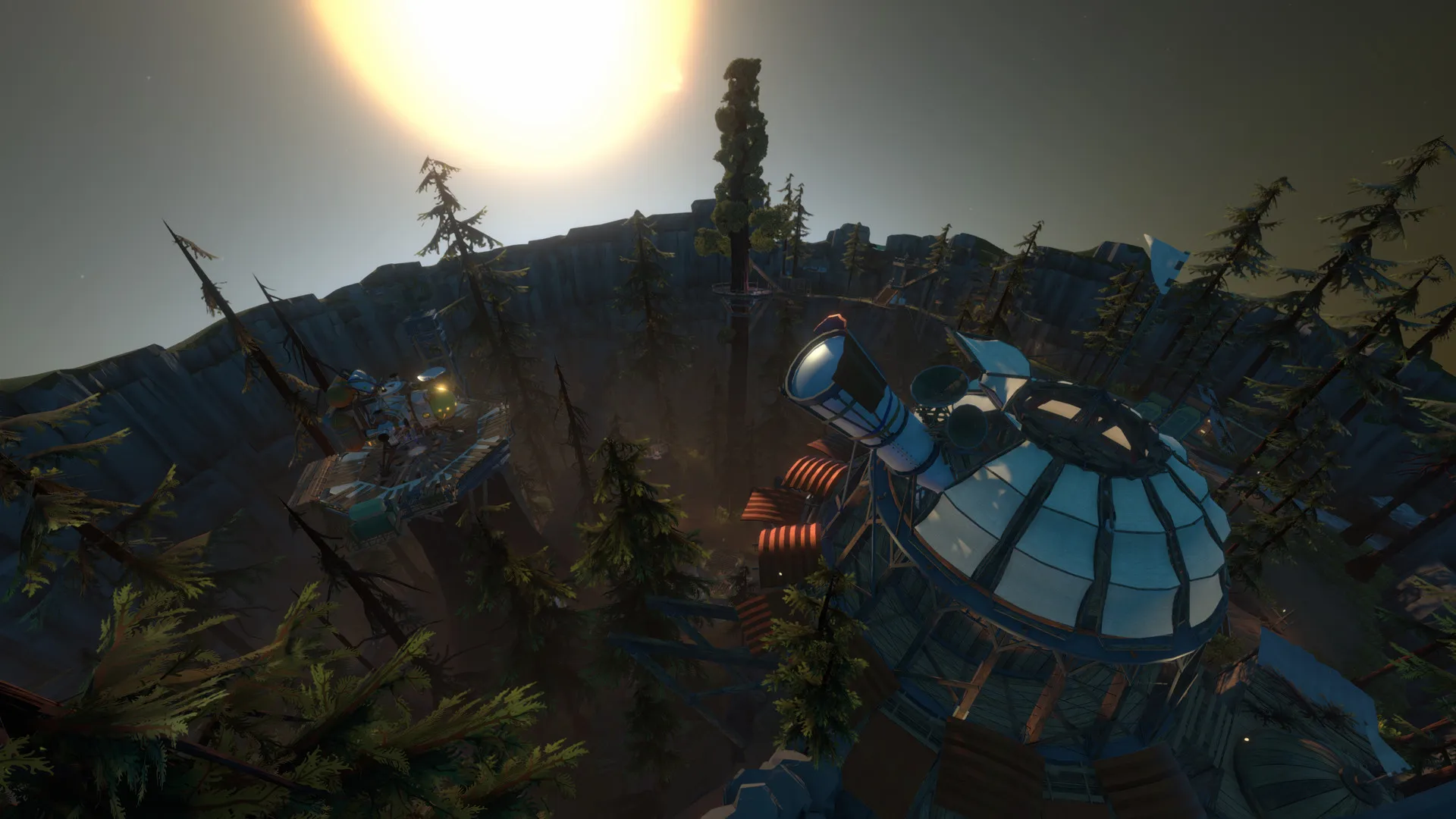
Outer Wilds is frequently described as a space exploration mystery, but that description understates its most radical design decision. The game’s 22-minute time loop is not simply a narrative hook; it is the structural foundation of every mechanic, discovery, and emotional beat. Unlike traditional progression systems that rely on leveling, inventory upgrades, or persistent world changes, Outer Wilds eliminates material permanence entirely. The only thing that survives each reset is player knowledge.
This article examines how the time loop restructures cognition, transforming exploration into epistemology. In Outer Wilds, progress is not measured in power but in understanding. The game succeeds not because it hides secrets, but because it teaches players how to think across cycles of repetition and revelation.
1. The First Loop and the Illusion of Conventional Progress
The opening loop resembles a standard exploratory tutorial.
Players learn how to pilot a ship, use a signalscope, and translate ancient text. Nothing suggests that these mechanics will soon operate under strict temporal constraints.
When the sun abruptly explodes and the world resets, the illusion collapses. The player realizes that physical progress is an impossibility. The loop reframes the entire game as an exercise in retention rather than accumulation.
2. The Reset as a Cognitive Filter
Each reset removes clutter.
Resources disappear, locations revert, and environmental changes rewind. This mechanical erasure forces players to prioritize memory over possession.
Selective retention
Because only knowledge persists, the mind becomes the inventory system.
This shifts player attention from “What did I collect?” to “What did I learn?” The reset becomes less punishment and more cognitive filtration.
3. Time as a Structural Constraint
The 22-minute limit creates urgency without artificial pressure.
Events unfold on deterministic schedules. Planets collapse, structures break apart, and environmental hazards evolve over time.
Temporal choreography
The solar system behaves like a clockwork mechanism, encouraging players to think in sequences rather than locations.
Understanding when something happens becomes as important as knowing where it happens.
4. Spatial Knowledge Over Mechanical Mastery
Outer Wilds does not demand high mechanical precision.
Piloting can be clumsy, and platforming forgiving. Instead, mastery emerges from mapping the solar system mentally.
Cartographic thinking
Players gradually internalize planetary geography, orbital timing, and hidden pathways.
The mind constructs a navigational framework that replaces traditional skill trees.
5. Mystery Design Through Fragmentation
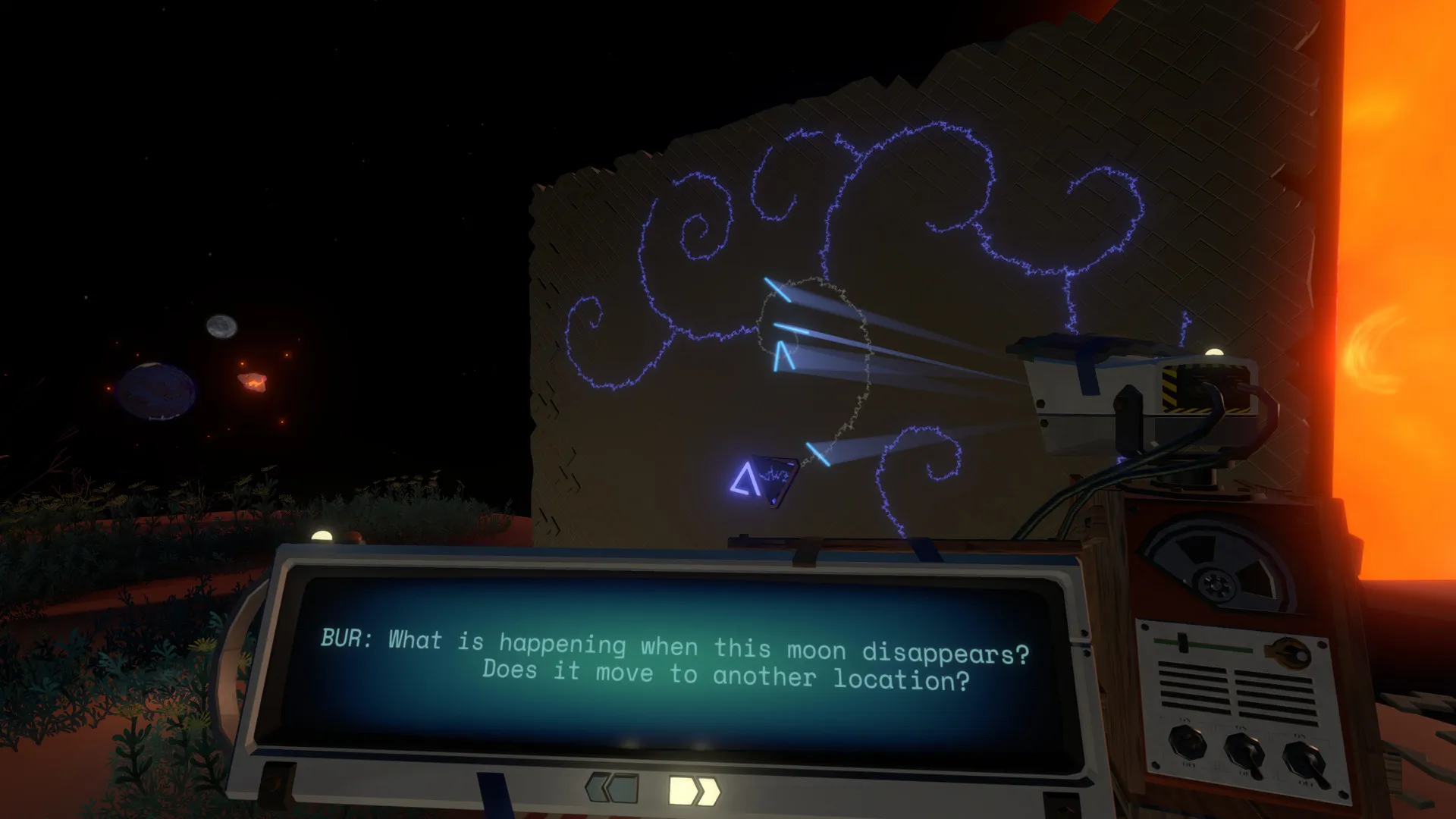
Information is distributed in fragments across planets.
Ancient writings, environmental clues, and subtle visual cues form a scattered archive of narrative data.
Non-linear reconstruction
Players assemble meaning in non-sequential order, creating a personalized path to comprehension.
This fragmentation ensures that discovery feels earned rather than delivered.
6. Failure as Information Acquisition
Death is inevitable and frequent.
Crashing into planets, suffocating in space, or being crushed by environmental hazards are routine occurrences.
Productive failure
Each mistake reveals structural knowledge about planetary systems and environmental behavior.
Failure accelerates understanding rather than halting progression.
7. The Ship Log as Cognitive Extension
The ship’s log records discoveries but never solves puzzles.
It organizes information spatially, linking clues through visual threads.
Externalized memory
The log functions as a second brain, reinforcing pattern recognition without removing interpretive responsibility.
It supports cognition without replacing it.
8. Emotional Resonance Through Repetition
Repetition could create monotony.
Instead, familiarity deepens attachment. Visiting the same locations across loops fosters intimacy with the solar system.
Comfort within catastrophe
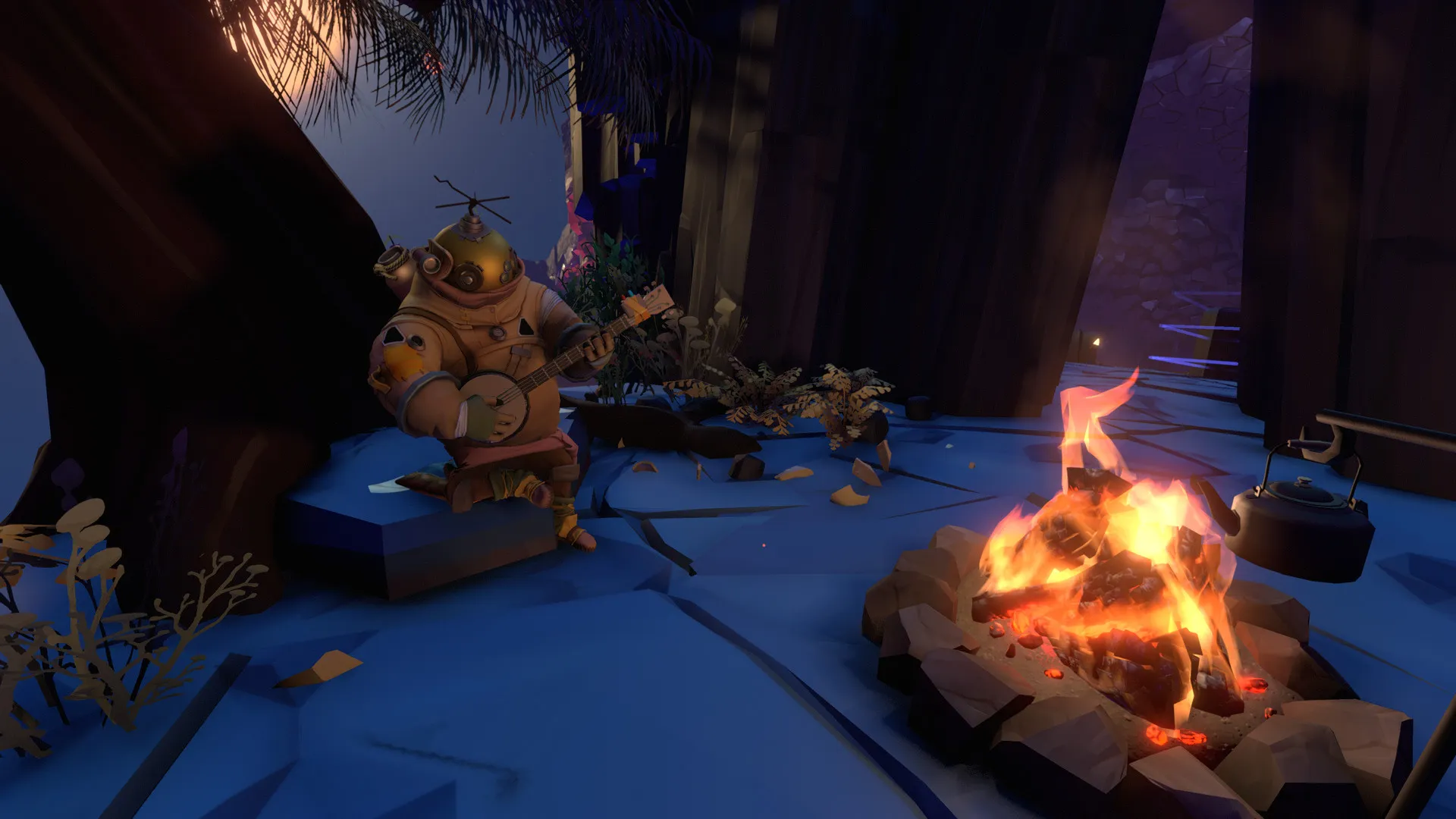
The impending supernova becomes strangely calming as understanding grows.
The player shifts from panic to contemplation.
9. The Collapse of Conventional Endgame Structure
There is no final weapon, no stat threshold.
The “endgame” is simply the moment when accumulated knowledge aligns correctly.
Epistemic climax
Completion depends on comprehension, not capability.
The final sequence feels inevitable rather than triumphant.
10. Why the Time Loop Is Irreplaceable
Removing the loop would dismantle the game’s identity.
Without reset-based structure, knowledge would become secondary to accumulation.
The loop enforces philosophical coherence: impermanence defines existence, and understanding defines meaning.
Conclusion
Outer Wilds demonstrates that progression systems need not rely on numbers or permanence. By making knowledge the sole persistent resource, the game transforms exploration into a cognitive discipline. The 22-minute loop is not a gimmick but a philosophical framework that shapes how players perceive time, space, and consequence. Each reset sharpens awareness, each failure clarifies structure, and each discovery redefines the system as a whole.
In doing so, Outer Wilds elevates the medium beyond conventional reward cycles. It proves that a game can remove material advancement entirely and still create one of the most satisfying progression arcs in interactive design—because understanding, once achieved, cannot be reset.