.webp)




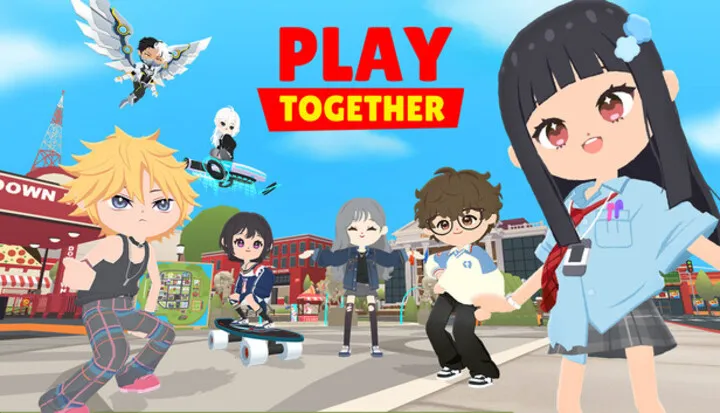
The virtual world of Play Together is often perceived at a surface level as a casual, minigame-oriented social sandbox designed for mobile platforms. However, beneath its vibrant, low-poly aesthetics and seemingly lighthearted gameplay loop lies a complex, evolving socio-economic system. The most profound manifestation of this system is the game’s virtual housing market. Over the years, the real estate landscape on Kaia Island has transformed from a rudimentary feature providing basic player identity into a sophisticated economic engine that drives player retention, social stratification, and digital consumerism. This article provides a deep, chronological, and analytical exploration of how domestic spaces in Play Together have evolved from the great equalizer of the "Cardboard Box" to the hyper-commercialized, user-generated metaverses of the modern era, reflecting broader trends in digital sociology and virtual economies.
The Dawn of Kaia Island: The Cardboard Box Era
The initial launch of Play Together introduced players to a world where digital equality was the baseline. Every citizen of Kaia Island began their virtual life in the exact same domestic structure: the iconic Cardboard Box. This era was characterized by a distinct lack of spatial differentiation. The Cardboard Box was not merely a starter home; it was a psychological leveling field. In this nascent stage of the game's economy, the accumulation of the primary in-game currency, Stars, was incredibly slow, meaning players spent a significant amount of time inhabiting this literal expression of digital poverty. The shared experience of living in a box fostered a unique early-game camaraderie, where social interactions in the Plaza were prioritized over domestic isolation.
The Psychology of the Starter Home
The design choice to use a cardboard box—a universal symbol of transience and destitution—was a brilliant psychological motivator. It created immediate status anxiety and established the foundational gameplay loop: work, earn, and upgrade. The claustrophobic interior and the comical, slightly pathetic exterior design served as a constant visual reminder of the player's low standing in the server's hierarchy. This drove early adoption of the game's labor mechanics, such as pizza delivery and continuous fishing, anchoring the player's initial engagement entirely around the desire to escape the box.
The Plaza as the Primary Social Hub
Because the Cardboard Box offered virtually no room for socialization or creative expression, the Hometown instance (where houses are located) was largely a ghost town during this era. Players used their homes solely as a spawn point or a place to quickly dump basic furniture items. The sociability of the game was forced outward into the Plaza. This involuntary communal living ensured that the public spaces of Kaia Island were densely populated, which was crucial for the game's early success in marketing itself as a massively multiplayer social hub.
Laying the Foundations: The First Expansion of Residential Zoning
As the game's population stabilized and the cumulative wealth of the player base began to grow, developers introduced the first major expansion of the housing market. This marked the transition from the Cardboard Box era to the establishment of true residential zoning. Players were finally able to purchase upgrades like the Milk Carton House, the Small House, and eventually, the classic Two-Story House. This period fundamentally shifted the game's dynamic, moving the ultimate goalpost from mere survival (escaping the box) to the active accumulation of digital property. The Hometown instance transformed from a transient spawn zone into a burgeoning suburban landscape.
The Introduction of Spatial Stratification
With varying tiers of housing now available, the visual landscape of Hometown began to reflect the economic disparities among players.
- The Milk Carton: Represented the emerging lower-middle class, a slight step up from the box but still comical in nature.
- The Small House: The standard middle-class dream, offering the first real semblance of a traditional architectural structure.
- The Two-Story House: The early indicator of wealth, requiring a substantial grind and representing a dedicated, hardcore player base.
This visual stratification introduced a new social dynamic. Players began to judge and categorize one another based on the exterior of their homes. House Parties, a newly introduced mechanic, began to gain traction, but attendance was heavily skewed toward those who had upgraded to at least a Small House. The architectural upgrade was no longer just about personal satisfaction; it became a prerequisite for digital social mobility.
Furthermore, this era established the core macroeconomic sink of the game. By pricing these new homes at incrementally steeper Star values, the developers successfully drained the excess currency that hardcore players had hoarded during the initial launch phase. This controlled inflation and ensured that the core gameplay loop of fishing and minigame participation remained necessary, tying the health of the game's economy directly to the expansion of the housing market.
The Introduction of the Blueprint System: Shifting to Creative Autonomy
Perhaps the most revolutionary update to the housing mechanics in Play Together was the overhaul of the interior design system, shifting from a rudimentary, fixed-placement mechanic to a highly flexible blueprint and grid system. Prior to this, players were severely limited in how they could arrange furniture, leading to interiors that felt generic and cookie-cutter regardless of the house's exterior. The blueprint system dismantled these restrictions, granting players unprecedented creative autonomy over their domestic spaces. This shift redefined the concept of the "home" in the game from a pre-packaged asset to a blank canvas for user expression.
The Grid as a Canvas
The new system allowed for precise manipulation of items—rotating, stacking, and merging furniture. This seemingly minor technical update had massive sociological implications. Players were no longer just decorating; they were architecting. The introduction of structural items like partition walls, stairs, and flooring tiles meant that the internal layout of a house no longer had to match its external shell. A simple Small House could be internally partitioned into a multi-room labyrinth, while a massive estate could be hollowed out into a single, cavernous dance hall.
The Rise of Interior Design Communities
This era saw the birth of a vibrant subculture within the Play Together community: the virtual interior designers. Social media platforms became flooded with elaborate house tours, and within the game, a new economy of "Star ratings" (the in-game system for liking a house) emerged. Players began competing not just on the size of their house, but on the ingenuity of their interior design. The focus shifted from the mere acquisition of wealth (buying the biggest house) to the tasteful application of that wealth, mirroring real-world sociological shifts from conspicuous consumption to cultural capital.
The Rise of the Virtual Real Estate Tycoon: Star Status and Property Valuation
As Play Together matured, a subset of the player base accumulated massive amounts of both Stars (earned currency) and Gems (premium/fiat currency). To cater to this ultra-wealthy demographic, developers introduced the luxury real estate tier. Properties such as the Magic Castle, the Modern House with a built-in pool, and the sprawling Resort Estate fundamentally altered the scale of virtual living. This era birthed the "Virtual Real Estate Tycoon," a player whose entire identity was wrapped up in property ownership and the relentless pursuit of the next massive architectural flex.
The Premium Currency Divide
The introduction of these luxury estates formalized a harsh economic divide within the game. While early house upgrades could be reasonably obtained through dedicated grinding (fishing, catching bugs), the upper echelon of real estate often required either an inhuman amount of grinding or the direct injection of real-world money.
- The Time-Labor Paradigm: Players spending hundreds of hours fishing to afford a single luxury home.
- The Fiat Injection: Players bypassing the labor entirely through microtransactions.
This divide created a visible tension in the Hometown instance. The massive, towering structures of the wealthy physically overshadowed the smaller homes, creating a virtual gentrification effect. House Parties hosted in these mega-mansions dominated the server lists, as players flocked to them simply to marvel at the architecture, turning the homeowners into minor server-level celebrities. The property itself became the primary vehicle for social clout, eclipsing avatar clothing or rare pets in terms of status signaling.
Furthermore, the valuation of these properties established a new baseline for the game's economy. Because these houses could hold a significantly higher capacity of furniture, the demand for high-end, expensive interior items skyrocketed. The luxury real estate market acted as a massive catalyst for the furniture economy, driving players to spend even more currency to adequately fill their newly acquired, cavernous spaces.
Architectural Renaissance: The Smart Home and Interactive Furniture Revolution
Having conquered scale and aesthetics, the evolution of the housing market turned its focus toward utility. Early furniture in Play Together was purely cosmetic. A bed was just a rectangle you could stand on; a stove was just a block. The "Architectural Renaissance" era changed this by introducing interactive and functional furniture, effectively transforming static houses into dynamic, livable smart homes. This shift was critical for player retention, as it gave players mechanical, gameplay-driven reasons to spend time in their own homes rather than just using them as social flexes.
Utility Over Aesthetics
The implementation of interactivity meant that the home became a place of maintenance and progression. Beds could now be used to restore the "sleep" desire, bathtubs for the "hygiene" desire, and chairs for the "rest" desire. This integrated the housing market directly into the core tamagotchi-style pet mechanics and player avatar needs. Suddenly, designing a house wasn't just about making it look good; it was about optimizing the layout for efficient gameplay. A well-designed house now had a functional "flow" that allowed a player to rapidly clear their daily tasks.
Domestic Micro-Economies
This era also saw the introduction of items that generated tangible value, such as indoor fishing ponds, harvestable planters, and eventually, minigame triggers. By bringing the outside world (like fishing in the Plaza) into the private sphere of the home, developers created domestic micro-economies. Players could host fishing parties in their living rooms, creating private, controlled environments for grinding currency away from the chaotic public servers. This privatization of the core gameplay loops represented a significant shift in the socio-spatial dynamics of Kaia Island, blurring the lines between public utility and private ownership.
The Social Hierarchy of Neighborhoods: Hometown vs. The Plaza
As homes became larger, more functional, and highly customizable, a noticeable shift occurred in the sociological makeup of the game's servers. The center of gravity began to shift away from the Plaza—the traditional heart of the game—and toward the Hometown instance. However, this migration was not uniform; it created distinct social hierarchies based on neighborhood location and the utilization of the "House Party" system. The way players interacted with space fundamentally changed, moving from spontaneous public encounters to curated, invite-only private gatherings.
The House Party as a Social Gatekeeper
The House Party mechanic became the dominant form of social organization. When a player hosted a party, their house was broadcasted to the entire server. However, this system inherently favored the wealthy and the established.
- Algorithm Dominance: Larger houses with high "Star ratings" and maximum player capacities naturally floated to the top of the party list.
- Themed Gatherings: Wealthy players could afford to build specialized venues (nightclubs, cafes, adoption centers), drawing massive crowds and monopolizing server attention.
This created a stark contrast between the vibrant, bustling estates of the virtual elite and the quiet, ignored starter homes of new players. The Hometown became a landscape of extreme social disparity. In the Plaza, everyone occupied the same physical space regardless of wealth; in Hometown, space was fiercely guarded and heavily curated. The transition from public to private socialization mirrored real-world trends of suburbanization and the retreat into private enclaves, demonstrating how deeply virtual worlds can replicate offline human sociological patterns.
Brand Integrations in Domestic Spaces: The Commercialization of the Home
As Play Together exploded in global popularity, it caught the attention of real-world corporations looking to establish a presence in the burgeoning "metaverse." This led to a fascinating and somewhat dystopian era in the housing market: the aggressive commercialization of domestic spaces through brand integrations. Companies like Line Friends, 7-Eleven, and various K-pop intellectual properties began selling branded furniture, wallpapers, and architectural elements directly to players. The virtual home transitioned from a space of personal expression into an interactive billboard.
The Invasion of Private Space
Unlike real-world advertising, which is usually relegated to public spaces or media consumption, virtual brand integration in Play Together infiltrated the most intimate spaces of the player's digital life. Players were voluntarily—and often enthusiastically—spending their hard-earned virtual (or real) currency to turn their living rooms into miniature 7-Eleven franchise locations or Line Friends merchandise showrooms. This phenomenon highlighted the profound success of gamified consumerism; players did not view this as intrusive advertising, but rather as premium, highly desirable content that elevated their social standing.
Blurring the Lines of Reality and Virtual Commerce
The psychological impact of this commercialization was twofold. First, it legitimized the virtual economy by tying it to real-world brands, making the digital real estate feel more "real." Second, it created a bizarre aesthetic homogenization within the game. Instead of building unique, imaginative fantasy homes, a significant portion of the player base was meticulously recreating mundane real-world commercial environments. The desire for brand association was so strong that players willingly sacrificed creative fantasy for corporate reality, marking a critical turning point in the sociological purpose of the virtual home.
The Housing Market Crash and Inflationary Pressures: A Macroeconomic View
No economic system can expand indefinitely without facing friction, and the Play Together housing market eventually encountered severe inflationary pressures. As developers introduced more ways to earn Stars to appease the growing player base, the overall money supply in the game's economy ballooned. To counteract this and maintain the prestige of new property releases, the developers had to exponentially increase the prices of new houses and premium furniture. This created a classic macroeconomic crisis: hyperinflation that severely punished new and casual players while barely impacting the entrenched, wealthy elite.
The Velocity of Stars and Wealth Disparity
The introduction of high-yield activities and automated VIP rewards meant that the velocity of the Star currency increased dramatically.
- The Legacy Rich: Players who had been around since the Cardboard Box era had amassed millions of Stars, allowing them to instantly purchase any new property.
- The New Player Deficit: For a new player, the chasm between their earning potential and the cost of a mid-tier home had grown exponentially wider than it was at the game's launch.
This inflationary period caused a localized "crash" in player morale regarding the housing market. Many casual players simply gave up on the dream of owning a luxury home, realizing that the labor required (the hours of manual fishing or bug catching) mathematically outpaced their available playtime. The housing market, once a universal motivator, became an exclusionary wall. The developers were forced to implement a delicate balancing act, introducing "rent" systems, temporary housing items, and cheaper alternative currencies to prevent the complete collapse of the entry-level real estate market.
The UGC (User-Generated Content) Explosion: Beyond Traditional Living Spaces
In response to the stagnation of traditional house building and the inflationary constraints of the economy, the community initiated a radical paradigm shift. Players stopped using houses as domestic living spaces entirely. Leveraging the flexible grid system and the introduction of simple logic-based furniture (like trampolines, invisible blocks, and timed triggers), players transformed their properties into sprawling User-Generated Content (UGC) hubs. The concept of the "home" was completely deconstructed; houses became literal game engines within the game.
The Birth of the Obby and the Maze
The most prominent manifestation of this was the rise of the "Obby" (obstacle course) and the puzzle maze. Players used floating blocks, traps, and complex platforming elements to build massive, challenging levels inside the shells of their luxury homes. These player-created minigames became incredibly popular, drawing hundreds of players to specific house parties solely for the challenge of completing the course. The architectural value of the house was no longer based on its aesthetic beauty or its display of wealth, but on its level design and interactive gameplay value.
Roleplay Communities and Institutional Architecture
Beyond obstacle courses, the UGC explosion saw the rise of intricate roleplaying sets. Players bypassed the game's official public buildings (like the school or the hospital) and built their own, highly detailed versions inside their homes. Massive estates were transformed into functioning virtual airports, high-security prisons, and elaborate fantasy kingdoms. This decentralized the game's narrative structure. Players no longer relied on the developers to provide content or context; they were utilizing the housing market to construct their own micro-societies, complete with player-enforced rules, economies, and social roles.
The Future of Kaia Island's Real Estate: Approaching the Metaverse Horizon
The journey of the Play Together housing market from a static cardboard box to a dynamic, user-generated micro-universe serves as a microcosm for the broader evolution of the digital metaverse. As the game looks toward the future, the virtual real estate on Kaia Island is poised to become even more decentralized and complex. The historical trajectory suggests that the developers will continue to relinquish control over spatial mechanics, giving players increasingly sophisticated tools to manipulate their environments, blurring the lines between game developer and game player.
Anticipating the Next Architectural Shift
Looking ahead, the next logical step in this evolution is the implementation of interconnected real estate and localized economies. Currently, houses exist as isolated instances. The future of Kaia Island's market likely involves:
- Contiguous Neighborhoods: Allowing players to physically link their properties, forming distinct, persistent towns outside of the Hometown instance.
- Player-to-Player Commerce: Enabling players to sell UGC items or charge entry fees to their elaborate in-house minigames directly, creating a true, circular virtual economy.
Ultimately, the housing market in Play Together proves that virtual real estate is never just about shelter or aesthetics. It is a profound socio-economic tool that dictates how digital citizens interact, how wealth is displayed, and how communities are formed. The architecture of Kaia Island will continue to evolve not just through the addition of new polygons and textures, but through the ever-changing sociological needs of the players who inhabit it.